

At a glance
- Tyre size alone does not confirm the suitability of Franna pick & carry cranes.
- Inspect load and speed ratings to reflect both pick-and-carry work and regular road travel.
- Check creep data for Franna cranes that carry heavy loads at very low speeds.
- Tread, construction and rim compatibility should match the crane’s actual operating environment and wheel setup.
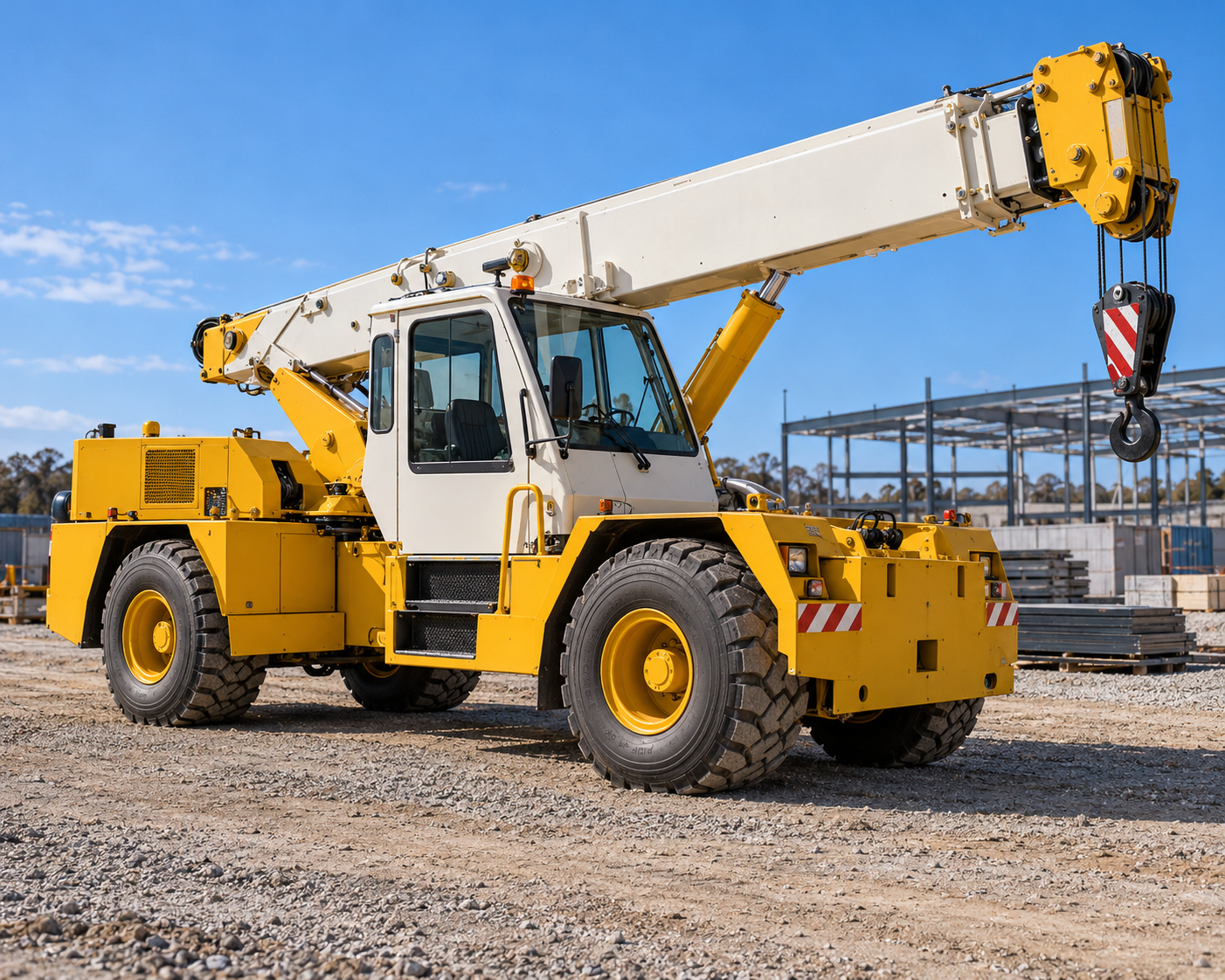
A Franna pick-and-carry crane combines road travel with on-site lifting, so its tyres face different demands from standard truck tyres. They need to handle mixed surfaces, varying loads and low-speed manoeuvring, often within the same shift.
If you choose a tyre by size alone, you can overlook differences in load capacity, speed rating and construction. These are important aspects that affect how Franna cranes perform.
Additionally, an unsuitable fitment may contribute to premature wear, excess heat build-up, poorer handling or reduced reliability during demanding crane operations and travel between sites. Getting this right depends on your exact crane model and how it is used, not a generic size match.
Below, we cover the key considerations for selecting tyres for your Franna, including load and speed ratings, creep data, tread design and rim compatibility.
Start With Your Exact Franna Model and Tyre Specification
Before comparing options, confirm the exact model and configuration of your Franna crane. Tyre requirements can vary between models and configurations, so this detail shapes every decision that follows. Record the full specification markings from the tyre currently fitted rather than relying on its diameter or width alone. Two tyres of the same nominal size can still differ in load index, speed rating and construction.
Once you have the complete markings, cross-check them against the crane manufacturer’s requirements before comparing alternatives. Not every tyre marketed as suitable for Franna cranes will match your exact configuration, so this step confirms you are working from the correct baseline. When you get the starting specification right, you can assess the load, speed and fitment checks that follow with confidence.
Match the Tyre’s Load Capacity to the Crane’s Working Requirements
The crane tyre load rating needs to match the loads placed on it at its specific wheel position, not simply the crane’s headline lifting capacity. A tyre can carry less than that headline figure implies once axle loading and wheel position are accounted for, so checking the tyre’s load index against actual working loads is essential before ordering.
Working requirements also shift with how the crane is loaded. A Franna travelling unloaded places different demands on its tyres than the same crane carrying a load between pick and set-down points. So, check load capacity against the operating condition that imposes the greater load on the tyres.
Check this against the tyre manufacturer’s load-and-inflation data to ensure the tyre can support the required duty rather than an assumed one.
Check Creep Data for Pick-and-Carry Operations
Creep data becomes particularly relevant when a Franna regularly lifts and carries loads at very low speeds. Some tyre manufacturers provide specific load data for very low-speed operation because the permitted tyre load can vary according to speed, inflation pressure and operating conditions. Therefore, don’t rely on the standard load index alone when assessing tyres for regular pick-and-carry work.
When reviewing the available creep data, check:
- Maximum creep load: The maximum load permitted at very low travel speeds.
- Required inflation pressure: The pressure needed for the tyre to achieve its specified creep load.
- Applicable speed: The speed threshold at which the creep load allowance applies.
- Applicable operating conditions: The type of low-speed operation the creep data applies to.
Choose a Speed Rating That Covers the Crane’s Road Travel
Your mobile crane’s tyre speed rating needs to cover how it actually travels between jobs, not just how it operates on site. If the crane regularly moves between worksites on public roads, the fitted tyres must meet the speed capability the manufacturer specifies for that travel, not just the requirements of low-speed site work.
Load and speed capability follow different test conditions, so don’t assume one from the other. A tyre rated for heavy-duty use at low speed may not carry the same load at higher travel speeds, which is why it’s worth checking the speed rating separately from the load requirements covered earlier.
Where to Verify Each Rating Before You Order
| Rating | Where to Verify It |
|---|---|
| Load Rating | Sidewall load index, cross-checked against the manufacturer’s load-and-inflation tables. |
| Speed Rating | Speed symbol on the sidewall, matched against the crane manufacturer’s travel speed requirement. |
| Creep Data | Manufacturer’s technical data sheet, requested separately if not listed. |
Match the Tread and Tyre Construction to the Operating Environment
Tread and tyre construction should match the surfaces where a Franna operates most often. Sealed roads and hardstand areas generally place greater emphasis on road handling, stability and even tread wear.
By contrast, gravel, loose surfaces and construction sites require stronger traction and greater resistance to cuts and surface damage. Identify the typical operating environment in which your Franna operates most often, as this is the starting point for tread selection.
From there, choose a tread pattern that balances traction, wear and road performance for that environment rather than selecting an aggressive tread because the crane occasionally works off-road. Tyre construction should also suit the intended application, as road-focused and mixed-service tyres prioritise wear, traction, heat management and surface conditions differently.
Confirm Rim Compatibility and the Complete Fitment Before Ordering
The right tread and construction only matter if the tyre also fits the wheel already on your Franna. Two tyres with similar overall diameter and width do not always share the same approved rim width, offset or mounting requirements, so matching on size is not confirmation of fit.
Before finalising your order, confirm the wheel assembly against:
- Approved rim width and offset for the tyre under consideration.
- Bolt pattern and stud configuration for the existing wheel assembly.
- Clearance around brake components, suspension parts or chassis fittings.
- Valve stem type and mounting hardware required for the assembly.
Check these details before ordering mobile crane tyres to prevent fitting a tyre that meets the specification sheet but does not suit your specific crane. Ask your supplier to confirm the complete tyre and wheel assembly, rather than the tyre alone, to ensure both components are compatible.
Tyres for a Franna pick-and-carry crane involve more than simply matching the tyre size. Your crane’s model, load rating, creep data, speed rating, tread pattern and rim specification all work together to determine whether a tyre performs reliably across both road travel and site work.
A tyre that merely fits differs from one built for your Franna’s actual operating duty, and checking each of these factors, rather than assuming compatibility from one alone, makes the difference.
If your Franna pick & carry crate is due for new tyres, speak with Oceanic Direct, an Australian tyre and wheel specialist with experience supplying solutions for mobile cranes. Contact our team with your crane and tyre details, and we can help you confirm the right fit for your application before you order.
FAQs
Can you mix different tyre brands or tread patterns on a Franna crane?
You must not mix different tyre brands, tread patterns or constructions (such as radial versus bias-ply) on the same axle of a Franna crane. Differences in tyre dimensions, construction or operating characteristics can affect handling and load behaviour, so confirm compatibility before mixing tyres.
Can a Franna tyre need replacing even if it still has usable tread?
Yes. A Franna tyre may require replacement despite having usable tread if it shows cuts, cracking, bulges, sidewall damage or other signs of deterioration. Therefore, consider tread depth alongside the tyre’s overall condition.
Why are my Franna crane tyres wearing unevenly?
Uneven tyre wear can result from incorrect inflation pressure, wheel alignment, steering or suspension issues, axle loading and operating conditions. Identifying the underlying cause can help prevent repeated wear; see these common causes of uneven tyre wear.
What should you do with old Franna crane tyres after replacement?
Send old Franna crane tyres through an appropriate tyre recovery, recycling or disposal pathway rather than placing them in general waste. Requirements vary by location, so check local rules and suitable old tyre disposal options in Australia.
Related Stories
What Makes Mobile Crane Tyres Different From Standard Truck Tyres?
At a glance Mobile crane tyres are designed to support heavy machine weight and worksite stability, not freight transport. Reinforced sidewalls, strong casing construction and versatile tread patterns help crane tyres perform across both roads ...
Related Posts