

At a glance
- Accurate vehicle details and modification history help establish the correct starting point for ordering custom super single wheels.
- Tyre markings, wheel specifications and hub measurements are essential for confirming fitment.
- Load requirements and operating conditions determine whether the wheel suits your truck’s real-world application.
- Only finalise design and finish after confirming the technical specification.
Ordering a super single wheel is not the same process as ordering a standard replacement. Because each wheel is manufactured to suit a specific truck, the supplier needs an accurate, complete set of details before it can prepare an appropriate wheel specification and quotation. Missing or estimated information can delay the process by requiring further measurements or clarification.
Part of the challenge is that trucks sharing the same make and model can still differ underneath. Hubs, wheel dimensions, mounting systems and axle setups are not always the same.
This is especially important if your vehicle’s brakes, suspension or axles have been modified since leaving the factory. A wheel specified from assumptions rather than actual measurements is unlikely to match the truck it is meant for.
The sections below cover the information you need to provide before ordering super single wheels.
Start by Providing the Truck’s Complete Vehicle Details
The starting point for any custom super single wheel enquiry is your truck itself. Provide the make, full model, series and year rather than the manufacturer’s name alone.
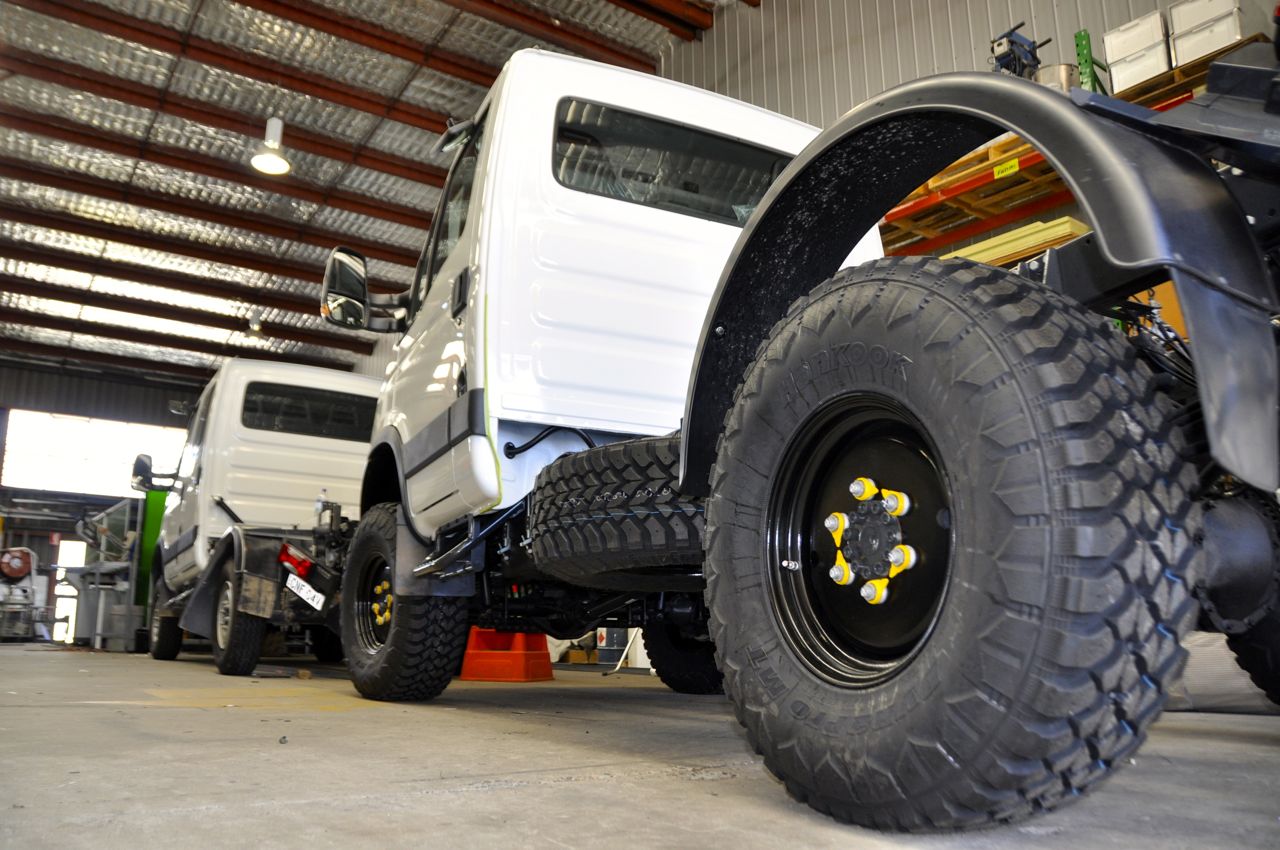
Hino super singles, Isuzu super singles and Fuso super singles can vary noticeably between series and build years, even under the same badge. Include the axle and drive configuration, such as 4×4 or 6×4, because this affects which wheel and hub arrangement applies to your truck.
It also helps to mention any changes made to the hubs, brakes, suspension or axles. If your vehicle has been modified from its original configuration, factory settings alone may not be enough to specify the correct wheel. Not disclosing these modifications can mean the proposed wheel specification or quotation needs to be reviewed later.
Record the Current Tyre and Wheel Specifications
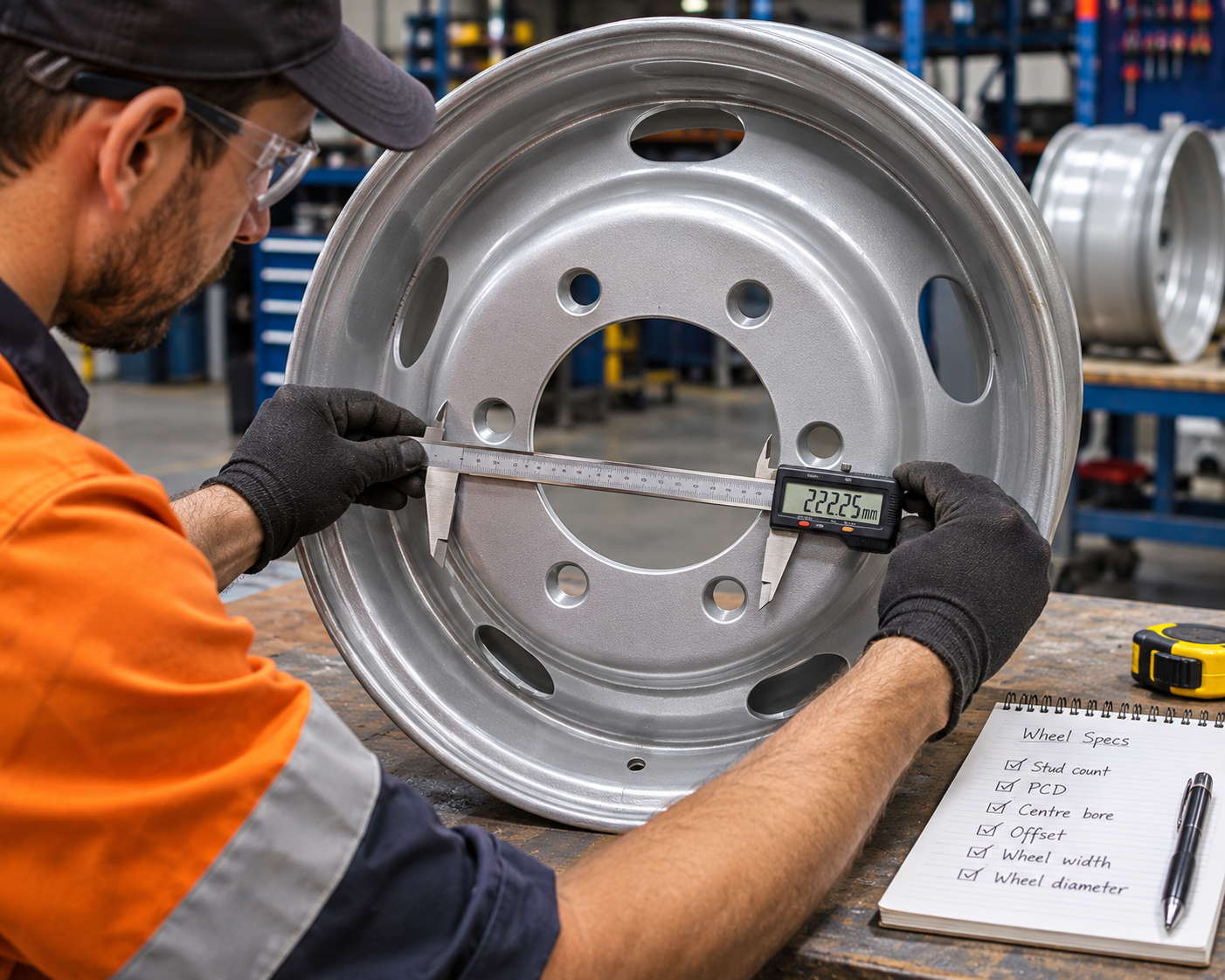
Alongside your vehicle details, the supplier needs an accurate record of what is currently fitted. Start with the complete tyre size shown on the sidewall, then note the current wheel diameter, width and offset from the markings stamped into the wheel where legible. These details help confirm the existing setup and what the new wheel needs to match.
If you have a part number or other stamped reference, provide it where available. This confirms the exact wheel more reliably than a visual estimate and reduces guesswork when confirming the measurements and specifications required for the quotation.
Tyre size alone is not enough to confirm wheel fitment, so pairing it with the wheel’s own markings gives a fuller picture.
Measure the Hub and Mounting Arrangement
Wheel diameter is only useful once you understand the mounting arrangement. Confirm whether your truck uses a five, six, eight or ten stud wheel, then measure the pitch circle diameter or PCD to establish how the mounting holes are spaced.
For example, if your truck is fitted for 8-stud super singles, it will not share a specification with a 6-stud arrangement, even if the outside dimensions look similar.
You also need to measure the centre bore, since this determines how the wheel’s central opening locates onto the hub. You should also confirm the type of wheel nut and stud-hole arrangement before ordering. Different systems, such as flange, tapered and ball-seat types, require matching mounting profiles for the correct fit.
Explain the Super Single Conversion You Require
The supplier also needs to know what you are trying to achieve, not just your truck’s current setup. State whether the enquiry involves converting rear duals to a super single, replacing an existing super single or moving from tube-type to tubeless. Each requires a different wheel specification, so identify it clearly in the enquiry.
Also confirm which axle positions need new wheels, and whether you need a reversible set. Where specified for your truck, you may be able to use a reversible wheel in more than one axle position. For dual-to-single conversions on both axles, it can also help align the front and rear wheel tracks, so confirm this detail early rather than assuming it.
Describe the Truck’s Load Requirements
Load is a key factor in a made-to-order truck wheel specification, so base it on documented requirements rather than estimates. Provide the gross vehicle mass and axle load ratings shown on your compliance plate or vehicle paperwork, since these figures help determine the load rating required for the proposed wheel-and-tyre combination.
It also helps to describe the typical load of your truck. A vehicle fitted with a motorhome body, tanks, agricultural machinery or other permanent equipment is working under a different load profile to the same base model without it.
Describing the truck’s typical loaded condition, rather than its empty weight, gives the supplier a realistic picture of what the wheel needs to handle.
Describe Where and How the Truck Will Be Used
Where your truck spends most of its time matters almost as much as what it carries. Let the supplier know its main operating environment because this shapes how the wheel needs to perform under everyday conditions:
- Highways
- Local roads
- Worksites
- Farms
- Off-road routes
Terrain matters just as much. Sand, mud, corrugations, gravel and uneven access roads place different demands on a wheel-and-tyre combination than sealed, on-highway running. Describing your truck’s normal conditions, rather than assuming a generic use case, helps the supplier match the specification to how it’s used.
Read More: Best Super Single Wheels for 4WD & Off-Road Trucks Working in Harsh Terrain
Choose the Preferred Wheel Design and Finish
With the technical specification settled, the remaining details are a matter of preference. Let your supplier know whether you would prefer a flat or curved centre, keeping in mind that the final design may depend on the wheel configuration required for your truck.
Finish is worth deciding at this stage too. Options typically include a powder-coat colour or chrome steel wheels for a different look and level of presentation. Keep these choices separate from the fitment requirements covered earlier, since you can adjust appearance without affecting how the wheel performs, while fitment details cannot be changed as freely.
A made-to-order super single wheel depends on how well it matches the truck it’s built for. That starts with your truck’s current setup, its tyre and wheel specifications and its hub and mounting arrangement. It also depends on what you are trying to achieve, whether that’s the type of conversion, load requirements, how your truck is used or the wheel’s final position and clearance. Design and finish preferences come last, once the technical details are settled.
Need help sourcing the right super single wheels for your truck? Oceanic Direct is a specialist supplier of made-to-order super single truck wheels. Send us your vehicle details, current specifications and application requirements for a vehicle-specific enquiry. Contact us to get started.
FAQs
What happens after you submit your wheel measurements and vehicle information?
We review the details to confirm the required wheel size, offset, load rating and finish. Our team may request further measurements or photographs before finalising the specification and proceeding with the order.
How long does it take to manufacture made-to-order super single wheels?
Manufacturing time varies according to the wheel specification and current production requirements. We’ll confirm the expected lead time once we’ve approved the measurements, design and order details.
Can you order a single replacement wheel for an existing custom-made set?
We may be able to supply a single replacement wheel once we can confirm the original dimensions, PCD, offset, centre bore and other specifications. Clear markings, measurements and photographs help reproduce the required configuration accurately.
Are wide-base single wheels better than dual wheels for every truck?
The better setup depends on your truck’s axle and hub configuration, load requirements, operating environment and maintenance priorities. Read the full comparison of dual wheels and wide-base singles.
Related Stories
Guide for Selecting Best Rims For Your ATV, Quad, and Dirt Bike Tyres
A rim of any vehicle is the outer edge of a wheel that holds the tyre firmly in place so that the tyre rotates in conjunction with the wheels. Rims can have different designs, widths, ...

Increasing Dependence On Logistics Via Trucks – What Does It Mean?
Our Increasing Dependence On Logistics Via Trucks Instead Of Air Freight – How Is This Impacting Our Need For High-Quality Truck Tyres And Rims? The transportation and logistics industries are some of our most vital ...
Related Posts

Essential Tyre Safety Checklist for Your Next Road Trip
With over 30-year experience as an importer, wholesaler, and retailer of wheels and tyres in Australia, we at Oceanic Direct know how quality tyres and wheels play a crucial role in providing you and your ...