

At a glance
- Super single tyres make pressure checks easier, so you can catch underinflation before it leads to tyre failure.
- You remove the pressure imbalance and tyre-to-tyre rubbing that can occur within a dual assembly.
- With a clearer view of each tyre, you can identify damage early and avoid unexpected roadside downtime.
- Choosing the right load rating, wheel fitment and inflation pressure is essential for a safe super single conversion.
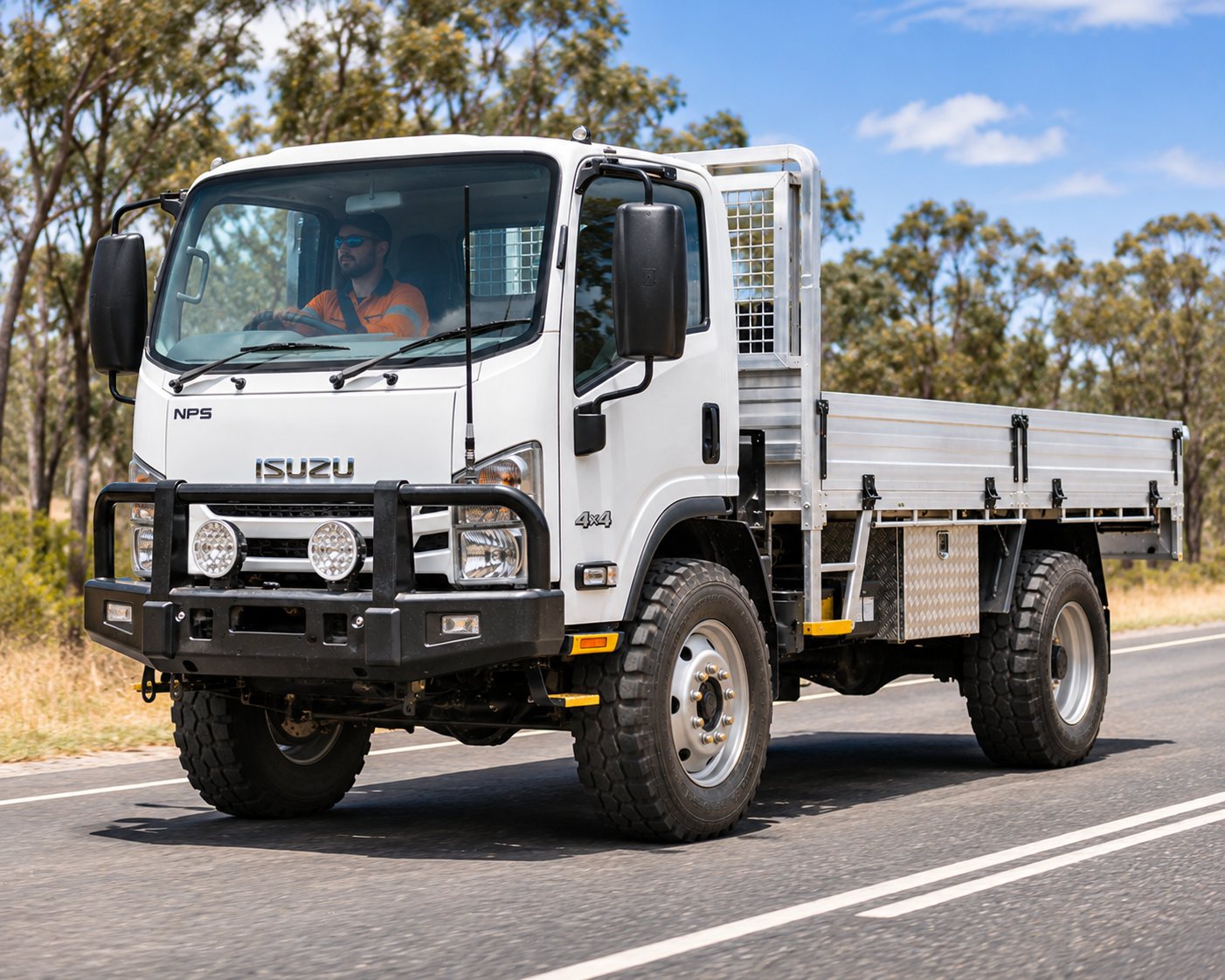
A truck tyre blowout can cost you far more than a replacement tyre. Vehicle downtime, roadside servicing, freight delays, extra maintenance costs and safety risks can all follow. Truck tyre failures can result from incorrect inflation, overloading, excessive heat build-up, tyre damage or road hazards, making regular inspections and pressure management essential.
Wheel configuration affects how easily you can do those checks. Dual setups use two tyres at each wheel end, and the inner tyre is harder to see and gauge. A super single replaces the pair with one wider, load-rated tyre and wheel.
Super singles do not eliminate blowouts, but their simpler layout can make inspection and pressure management easier, which helps you spot problems early.
This blog explains how super single tyres can help reduce truck blowout risk and what fleet operators should check before converting.
How Can Super Singles Help Reduce Blowout Risk?
Super single truck tyres cannot remove every cause of a blowout, but they do remove several problems that are specific to dual assemblies. Here are the main areas where they make a difference:
Easier Pressure Checks Help Catch Underinflation Earlier
A dual assembly places two tyres and two valves at each wheel end, and the inner valve sits behind the outer wheel. A super single has one tyre and one valve at each converted wheel end, so the valve is generally easier to reach than the inner valve on a dual assembly, which makes truck tyre pressure management quicker and easier to repeat consistently.
This matters because underinflation is one of the most common causes of a truck tyre blowout. An underinflated tyre flexes excessively during operation, and the heat that results can progressively damage its casing.
If you catch underinflation early and keep sound pressure and loading habits, you can correct the problem before the tyre fails. Pre-start checks also take less time, and you face fewer roadside stops caused by a slow leak that went unnoticed.
No Paired Tyre Means No Dual-Tyre Pressure Imbalance
Duals share the load properly only when both tyres run at matched pressures. If one tyre loses pressure, the companion tyre may carry a greater share of the load, increasing stress until the imbalance is corrected.
Enforcement data shows how often this occurs. In a 2019 NHVR enforcement operation, almost a third of dual tyres could not be pressure-tested, and nearly all of those were inner tyres. Where inner and outer pressures could be compared, 27% of wheel ends differed by more than 5%. A super single has no partner tyre, so this mismatch cannot develop. For fleets, this eliminates one potential source of uneven tyre loading and simplifies pressure management.
Removing Dual Tyres Eliminates Tyre-to-Tyre Rubbing
The facing sidewalls of tyres in a dual assembly sit close together. Underinflation, overloading or incorrect fitment can reduce the clearance between them until the tyres touch, so matching tyre load ratings to the axle matters on any setup.
Contact between tyres creates friction and extra heat, which can weaken the casings over time. A super single is fitted without a neighbouring tyre, so there is no adjacent sidewall to cause chafing damage. That takes one cause of casing wear out of your maintenance routine and can reduce unplanned tyre changes caused by sidewall damage.
Better Visibility Makes Tyre Damage Easier to Identify
With no inner dual tyre in the way, you and your technicians have a clearer view of the tyre during pre-start and scheduled maintenance checks. Cuts, sidewall damage, punctures and abnormal wear are easier to spot when nothing blocks the view.
Earlier detection gives you time to repair or remove a compromised tyre before damage leads to a failure. Knowing the signs a truck tyre needs replacing helps you act on what you see. Fleet tyre maintenance of this kind lets you fit repairs into scheduled downtime, so fewer trucks are stranded roadside and fewer loads arrive late.
Thinking about moving from duals to super singles?
Oceanic Direct can source vehicle-specific super single conversions for trucks, buses and cranes. Once we know your truck’s make, model, axle setup and load requirements, we can identify the right wheel and tyre combination.
What Fleet Operators Should Check Before Switching to Super Singles
Super singles help only when they suit the truck and the job, so these areas need assessing before a conversion goes ahead:
- Load capacity: One tyre now carries the load that two carried before, so the tyre and wheel need ratings that cover the heaviest loads the axle carries, not the average run.
- Wheel and axle compatibility: Stud count alone is not enough. Hub configuration, pitch circle diameter (PCD), centre bore, offset and clearance all need to match the axle, so each wheel measurement should be verified before ordering.
- Operating environment: Super singles tend to suit highway and well-serviced regional routes. On rough access roads or remote runs, the conversion needs closer assessment. A failed tyre leaves no companion tyre to carry the load, and roadside help may take longer to arrive.
- Inflation requirements: New pressure targets should come from the selected tyre’s load and speed data and the manufacturer’s guidance, not the old dual figures. Pre-start checks and any monitoring alerts also need updating to match.
- Conversion and compliance requirements: This setup also needs to suit the vehicle and meet current Australian requirements. Axle mass limits can differ for wide single tyres, so they should be confirmed with the NHVR or your state authority before the wheels are changed.
Super singles cannot prevent every tyre blowout, because correct inflation, appropriate loading, tyre condition and road hazards still affect the outcome. They do remove problems specific to dual setups, including hidden inner tyres, pressure imbalance and tyre-to-tyre contact. They also give you clearer access for routine checks.
That can make preventive tyre maintenance simpler for your fleet and reduce the disruption that follows an unexpected failure. The benefits are greatest when the conversion matches your truck, load and route.
Already considering a conversion? Speak with Oceanic Direct before you order wheels. As specialists in custom super single conversions, we can help you confirm the setup suits your truck and routes. Get in touch with us today to get started.
FAQs
Can tyre-pressure monitoring systems be used with super single truck tyres?
Yes, compatible tyre-pressure monitoring systems (TPMS) can be used with super single truck tyres to track inflation pressure and alert you to pressure loss. Some systems also record temperature, which helps you identify potential tyre problems before they cause failures.
Do super single tyres affect a truck’s fuel consumption or available payload?
Yes, they can. Compared with some dual-tyre setups, super singles typically weigh less and have lower rolling resistance, which may improve fuel efficiency. The weight saving may also increase your available payload, depending on the truck’s configuration and legal load limits.
What happens if a super single tyre fails compared with one tyre in a dual setup?
A tyre failure requires prompt attention, whether the truck uses dual wheels or wide-base singles. With duals, the remaining tyre can carry some of the load for a short distance, although it is then overloaded and can fail itself. A super single leaves no companion tyre, so you need to stop safely and arrange assistance straight away. In both cases, the tyre should be inspected and repaired or replaced before the truck continues.
Does hot Australian weather increase truck tyre blowout risk?
It can. Extreme heat raises tyre temperatures and can contribute to blowouts, particularly when tyres are underinflated or overloaded. Checking pressures when tyres are cold and keeping them at the recommended level helps you reduce the risk. Monitoring how heat affects tyre wear also shows you when a tyre is deteriorating.
Related Stories
Guide for Selecting Best Rims For Your ATV, Quad, and Dirt Bike Tyres
A rim of any vehicle is the outer edge of a wheel that holds the tyre firmly in place so that the tyre rotates in conjunction with the wheels. Rims can have different designs, widths, ...
Increasing Dependence On Logistics Via Trucks – What Does It Mean?
Our Increasing Dependence On Logistics Via Trucks Instead Of Air Freight – How Is This Impacting Our Need For High-Quality Truck Tyres And Rims? The transportation and logistics industries are some of our most vital ...
Related Posts


Essential Tyre Safety Checklist for Your Next Road Trip
With over 30-year experience as an importer, wholesaler, and retailer of wheels and tyres in Australia, we at Oceanic Direct know how quality tyres and wheels play a crucial role in providing you and your ...